
Thomas Schomberg's Address
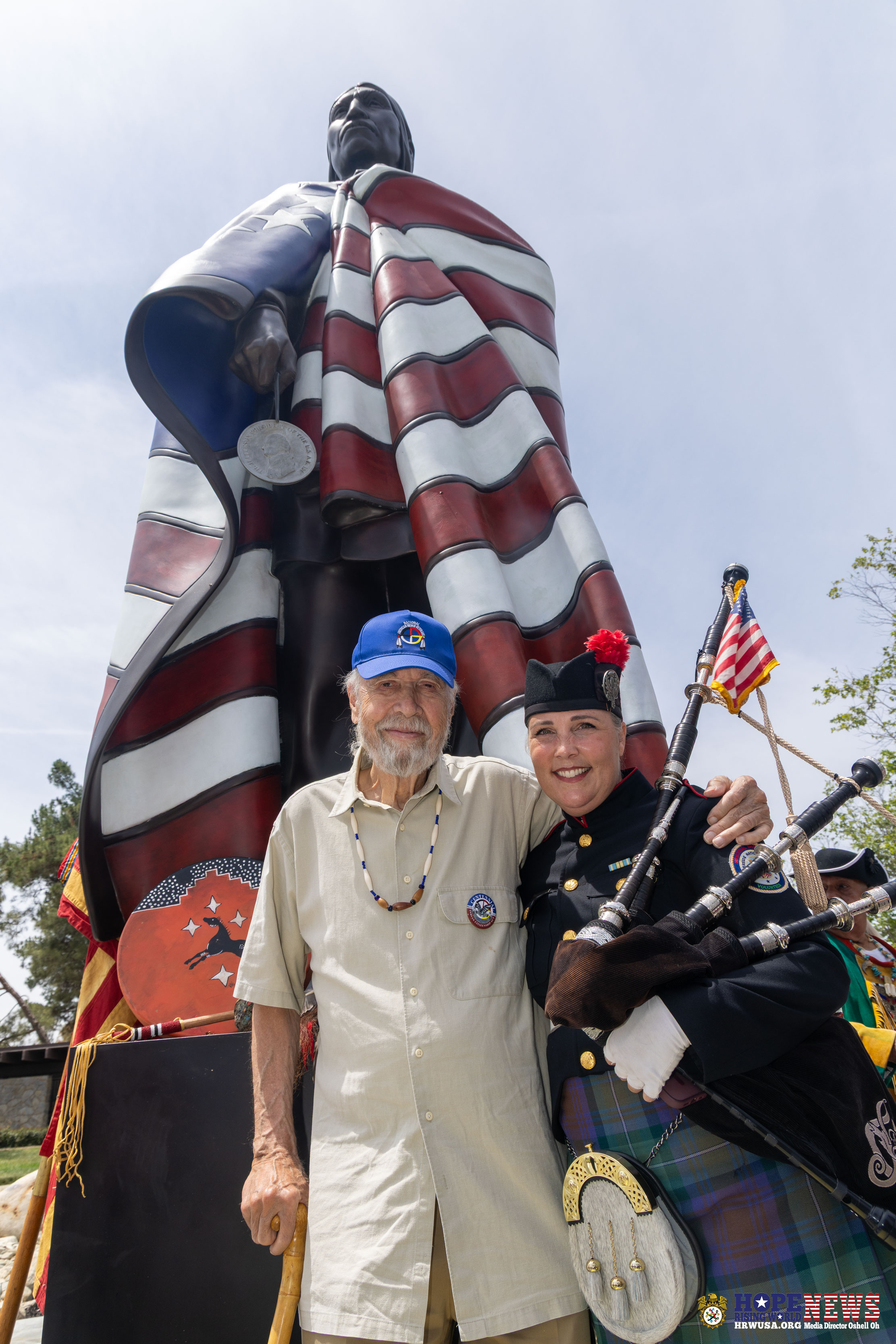
A. Thomas Schomberg's Address The Inspiration: Sculptor A. Thomas Schomberg emphasizes that he is merely the artist, while the First Nation people are the true inspiration behind the monument. He thanks them for their land and over 250 years of dedicated service to the U.S. military. Symbolism of the Monument: The Eagle Gates & Unity Circle: The pathway features two eagles leading to a circular base on the ground, representing the unity of the country's four great cultures (red, black, white, and yellow). The Figure & Feathers: The central figure depicts an honored leader, chieftain, or medicine man, featuring two eagle feathers on the right shoulder to represent all tribes. The Continental Flag: Inspired by a suggestion from Chairman Lyons to "wrap him in a flag," the figure is wrapped in a continental flag, symbolizing the Native American contribution to and embrace of the nation. The Jefferson Medal: The figure holds a Jefferson medal, referencing the medals distributed during the 1803 Corps of Discovery military expedition, acknowledging that First Nation people made that historic journey possible. The Facial Features: The face of the sculpture was inspired by the Plains Indians from Schomberg's youth and the life-cast work of his friend, Dave Parham. Introduction of the Code Talkers Honoring the Legacy: The first speaker introduces Elliot Morris (son of WWII veteran code talker Joe Morris, Sr.) and his sister, Coleen, who are representing three code talker families. Strategic Importance: The speaker highlights the critical, mission-critical role the American Indian code talkers played in World War II, noting that their unbreakable, custom-developed language baffled the enemy and saved countless lives.
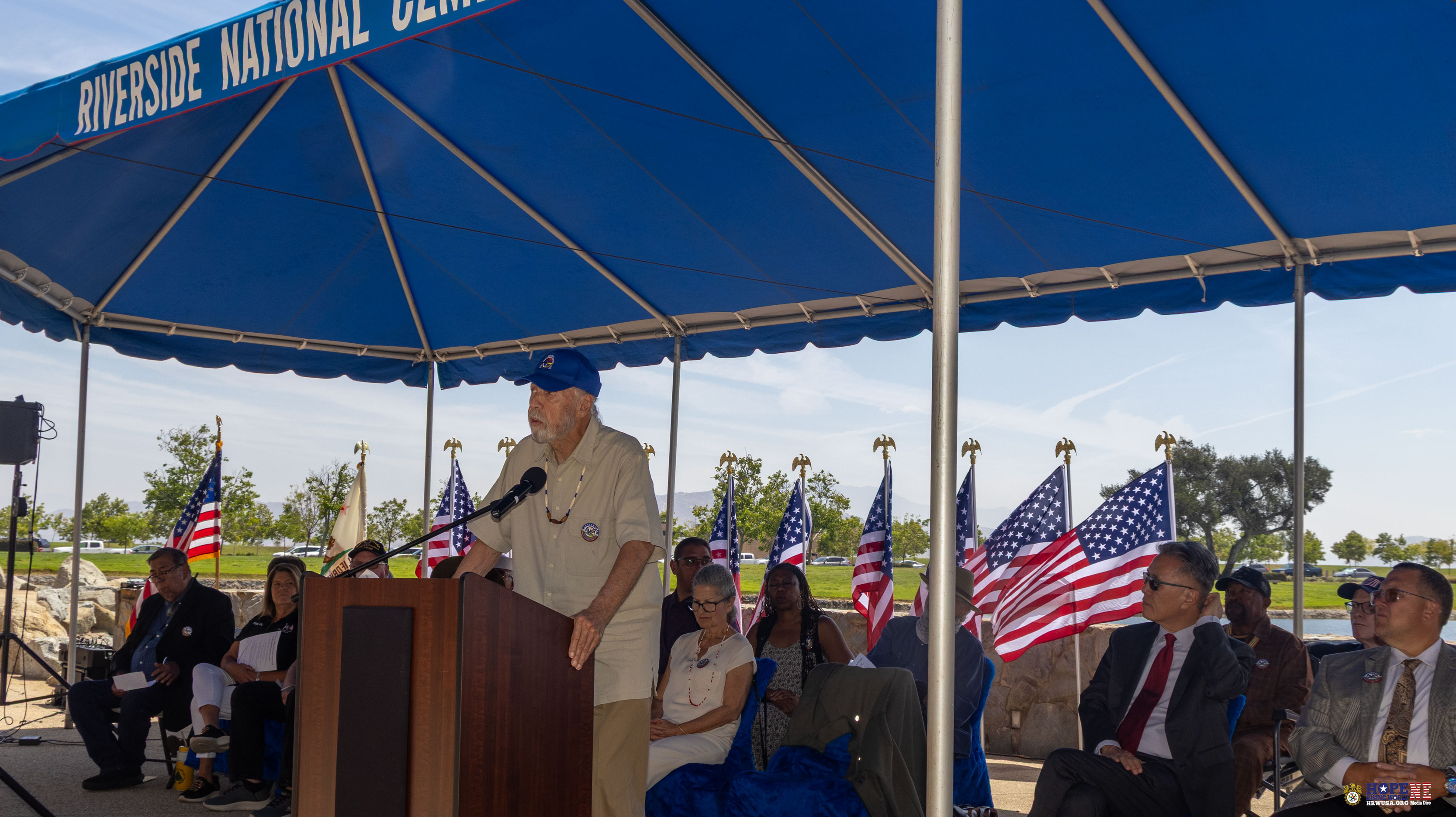
Click the photo to view the full-size image.
The Gift centerpiece monument, American Indian Veterans Memorial. Sculptured by a good friend of mine, got real good with him over the past few years, A. Thomas Schomberg. But before Tom comes up, got a special recognition that we got to make here. All smart men know that not behind them, but alongside them, and when in support of them, stands a strong woman. Right? (Applause) I want to introduce to you, so proudly, that strong woman that Tom knows as his wife. Cynthia, would you... (Cheering and applause) How about that? Alright Tom, it's your time now, buddy. (Applause)
Part 2: A. Thomas Schomberg's Address
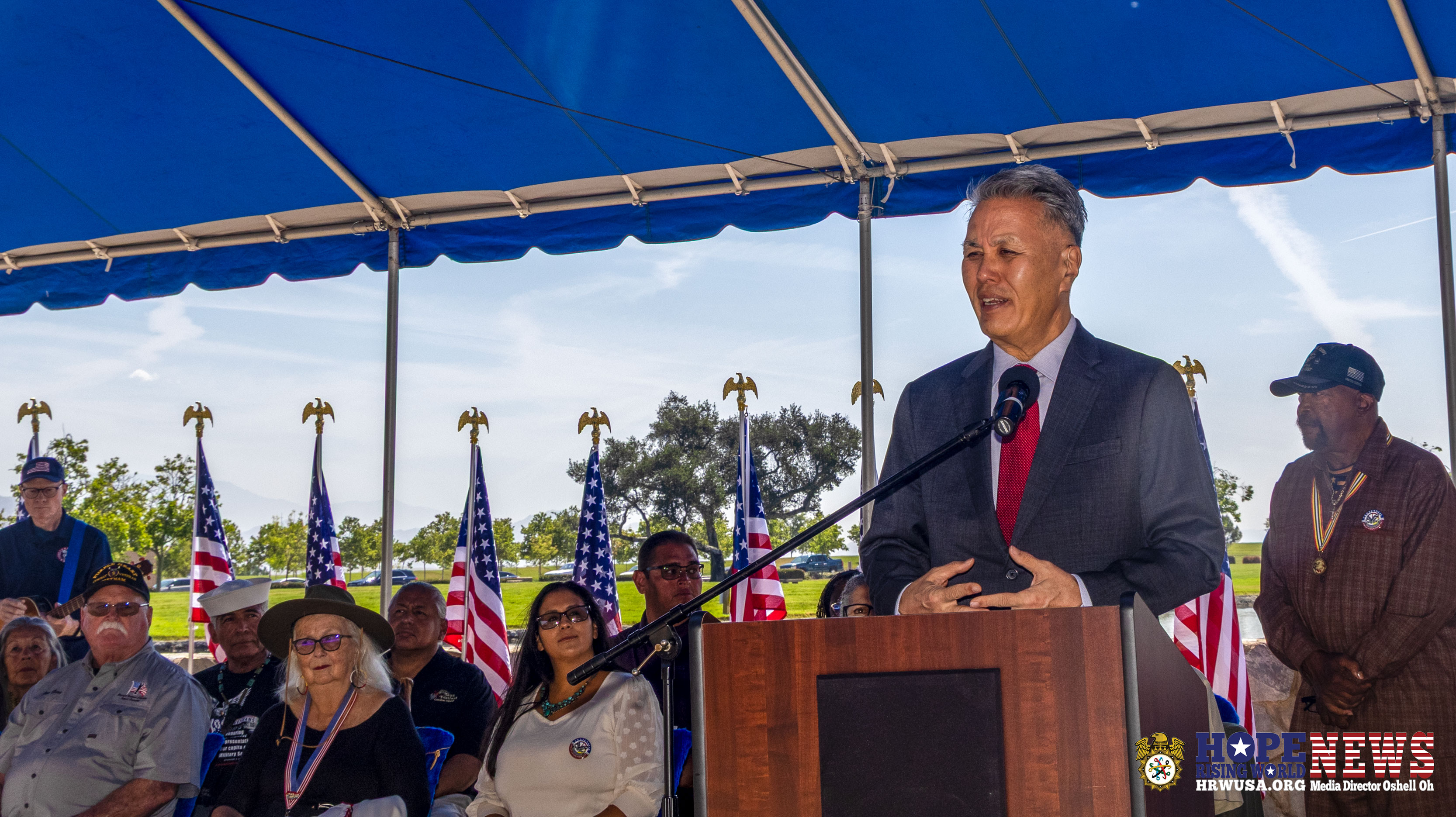
Second Speaker (A. Thomas Schomberg): Ladies and gentlemen, and friends, relatives, and yes, I am her husband. (Laughter) Friends and honored guests, and First Nation people. First Nation people. I've told you this before, I am only the sculptor. You, First Nation people, are the inspiration of what we were able to do today. And if you would, I would just like to venture up to the monument—which you'll be able to do later today—but as you venture up to the monument, and you move down through what I call the—the Eagle Gates, those two beautiful eagles on either side of the pathway, in this hallowed ground, you reach the statue. And it is encased in a unity circle, which is that round circle placed on the ground, symbolic of the four cultures, the great cultures of this great country: the red, the black, the white, and the yellow. We all are one, and that unity circle is meant to define our culture.
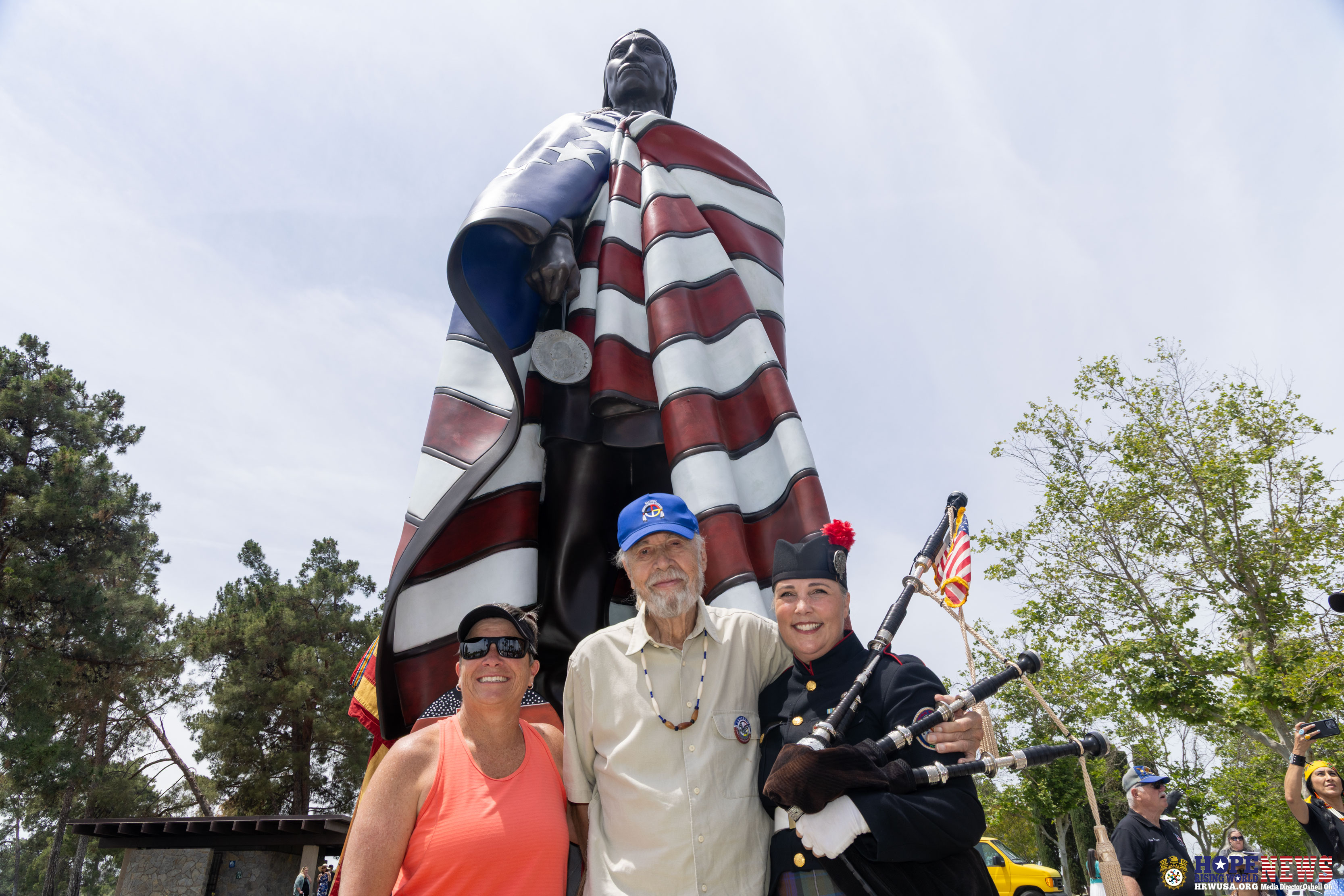
And as in the center, placed The Gift. As we move from the face, the honored leader, chieftain, medicine man, we move down to two feathers, two eagle feathers resting on his shoulder, right shoulder, representing perhaps all of the tribes resting on his shoulder, on that monument. And as we move down, he's wrapped himself in a continental flag, wrapping himself in this country. And finally, he is standing there holding, not wearing but holding, a Jefferson medal. So as we regress, Thomas Jefferson gave the Corps of Discovery, which was a military expedition, medals to give out to all of the tribes as they went west. That was a military expedition, and we know for sure what happened after 1803, and the fact that the First Nation people made that journey possible—Sacagawea and others. It's the purpose of that particular monument.
And I would like to thank all of the people who were involved, for I again, I was simply the inspired. We move down to the face, which was inspired by Plains Indians from where I grew up, and in particular a friend of mine, Dave Parham, who had done a number of life casts. And then finally, as we move further down, Chairman Lyons inspired us when we were slowing and having a difficult time in the final design. His comment was, "Wrap him in a flag." And I knew that was the completion of that particular sculpture, and would recognize all of you First Nation people in this great country. And I conclude simply by saying, First Nation people, thank you for 250 plus years of service to the US military. (Applause) And I thank you for your land, all of your land. And I thank you, in return, we gave you a Jefferson medal. Thank you. (Applause)
Part 3: Introduction of Elliot Morris
First Speaker Okay, now we'll hear from the World War II American Indian code talkers. Mr. Elliot Morris, son of World War II veteran code talker, Joe Morris, Senior. Alright, Elliot, would you come up to the mic? Sending our wishes for all of you. And he has with him his sister, Coleen, to introduce three code talker families. Now, before he comes, I didn't have any direct association with any code talkers in the war, but from all surviving veterans of any war that the United States has been in, we know how important it was to have the code talkers. (Applause) We could not have been as successful in our missions if the enemy knew what we were going to be doing. And so the code talkers developed a language that they understood, and translated to the rest of us, so that we can go about our mission and leave the enemy scratching their heads, okay? (Applause) Come on, come on. (Applause)
Event Gallery
Comments
Log in with Level 1 or higher to comment