
RV Fire-Prevention Tips While Driving
RV Fire-Prevention Tips While Driving Switch Off The Gas Shut off the propane at the tank and turn off all propane-powered appliances. Monitor All Gauges If a gauge registers out of normal operating ranges, stop and get it checked out. Park In A Safe Spot Be cautious of where you pull over and park. A hot exhaust pipe or catalytic converter can easily ignite dry grass underneath your RV. Regularly Eyeball Tires At each rest stop, give your tires a check: Look at them and feel the hub of each one to make sure they’re not excessively hot to the touch. This would indicate a wheel bearing or brake issue, and you shouldn’t continue until the problem is checked and corrected. It’s also a good idea to use a tire pressure monitoring system (TPMS) so you’re notified if a tire gets too hot. RV Fire-Prevention Tips While Camping Clean Up Leaks Or Spills ASAP Gasoline and propane can pose an immediate danger; deal at once with any leaks or spills. For any gas-powered devices like lanterns or grills, make sure to handle the fuels in adequately vented areas. Connect Safely
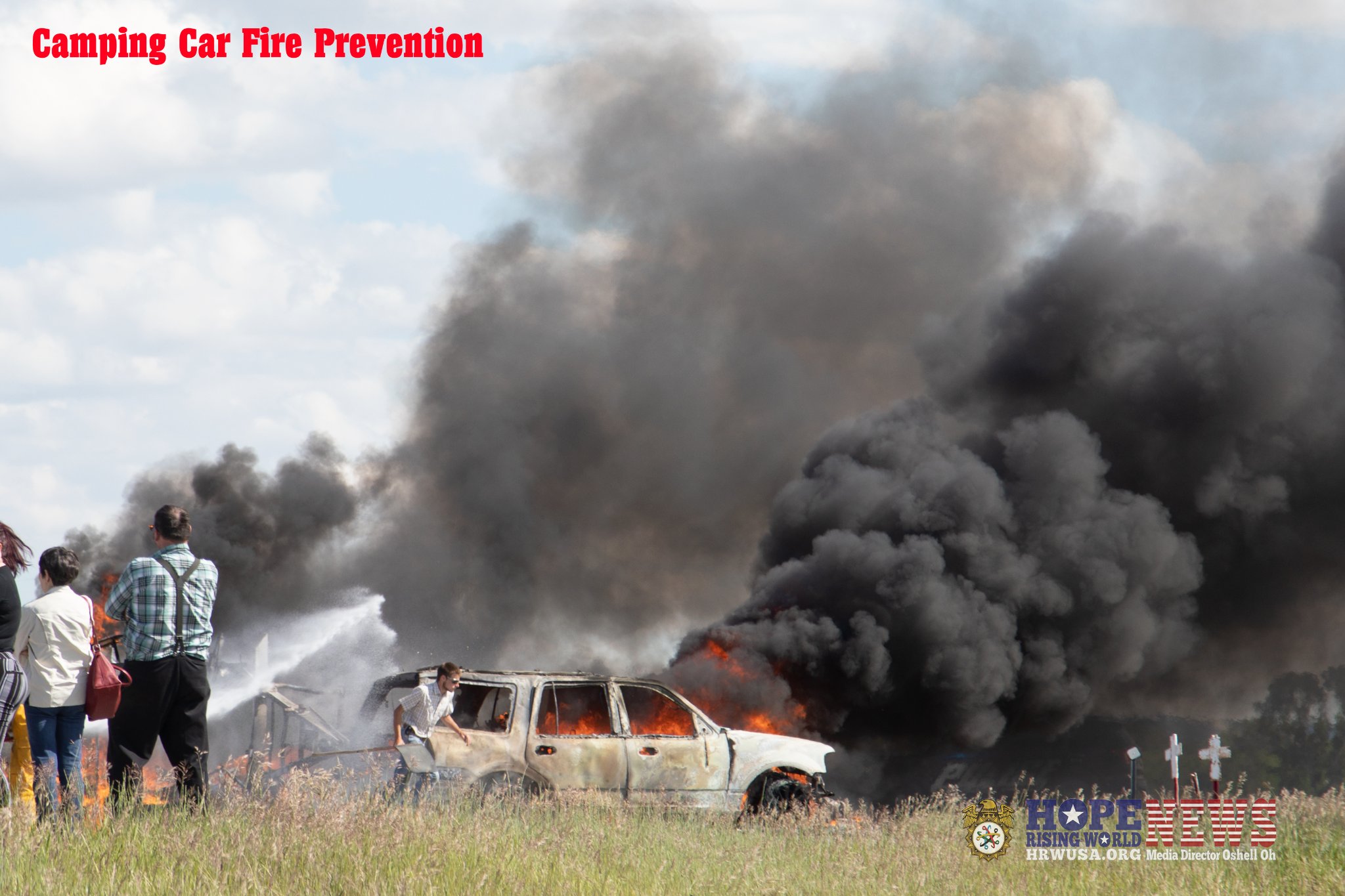
Click the photo to view the full-size image.
Photo by Hrwnews.com since June 26, 2022
RV Fire-Prevention Tips While Driving
Switch Off The Gas
Shut off the propane at the tank and turn off all propane-powered appliances.
Monitor All Gauges
If a gauge registers out of normal operating ranges, stop and get it checked out.
Park In A Safe Spot
Be cautious of where you pull over and park. A hot exhaust pipe or catalytic converter can easily ignite dry grass underneath your RV.
Regularly Eyeball Tires
At each rest stop, give your tires a check: Look at them and feel the hub of each one to make sure they’re not excessively hot to the touch. This would indicate a wheel bearing or brake issue, and you shouldn’t continue until the problem is checked and corrected. It’s also a good idea to use a tire pressure monitoring system (TPMS) so you’re notified if a tire gets too hot.
RV Fire-Prevention Tips While Camping
Clean Up Leaks Or Spills ASAP
Gasoline and propane can pose an immediate danger; deal at once with any leaks or spills. For any gas-powered devices like lanterns or grills, make sure to handle the fuels in adequately vented areas.
Connect Safely
Ensure that the power cord connecting your RV to a campground’s electricity supply is in good condition and of a suitable gauge to handle the electrical load. Replace damaged cords immediately. Always make sure the electrical connections at the pedestal hookup are secure, and try to avoid using electrical adapters and extension cords when making electrical connections, which can result in excessive heat and fires.
Say No To Power Strips & Extension Cords
Using power strips inside the RV can overload electrical outlets, and circuit breakers don’t always prevent overloads from starting fires. For extension cords, if you must use one, be sure it’s heavy-duty or specifically made for RVs, and that the load you put on it is well within its capacity. Don’t run any electrical cord under a carpet or floor mat.
Beware Of Gas Leaks
If there’s a leak in the propane system powering your refrigerator, furnace, oven and stovetop, the alarm should sound. When that happens, extinguish any open flames and pilot lights and don’t touch electrical switches. Exit the RV and turn off the main gas supply valve. Leave the door open and don’t return until the odor clears. Have the system checked out by a qualified technician before using it again.
Cook Carefully
Never leave the stove unattended while cooking and don’t keep anything flammable in the vicinity of the burners.
Be Smart About Heaters
Only use portable electric heaters that have safety features like an automatic shutoff in case of overheating or being tipped over. Never use a fuel-burning heater in an RV; it can start a fire, and because it’s not vented to the outside, people in the RV will be exposed to dangerous carbon monoxide gas. Also, don’t keep camping heaters and lanterns on while sleeping.
Use Your Generator Far From The RV
Operate your generator in an area where gasoline fumes cannot reach an ignition source. Place it as far away as the RV power cord will reach and face the exhaust away from the camping area. Also, don’t place the generator exhaust close to anything that could easily ignite from the heat.
Build A Safer Campfire
Campfires should be at least 25 feet away from anything that can burn, including the RV. Keep any campsite fire sources, such as Tiki torches and lanterns, away from the vehicle as well.
from How to Help Prevent an RV Fire
Event Gallery
Comments
Log in with Level 1 or higher to comment